Game-ify Science: Board Game Design Brings Learning to Life
What if science wasn’t just something you studied, but something you played?
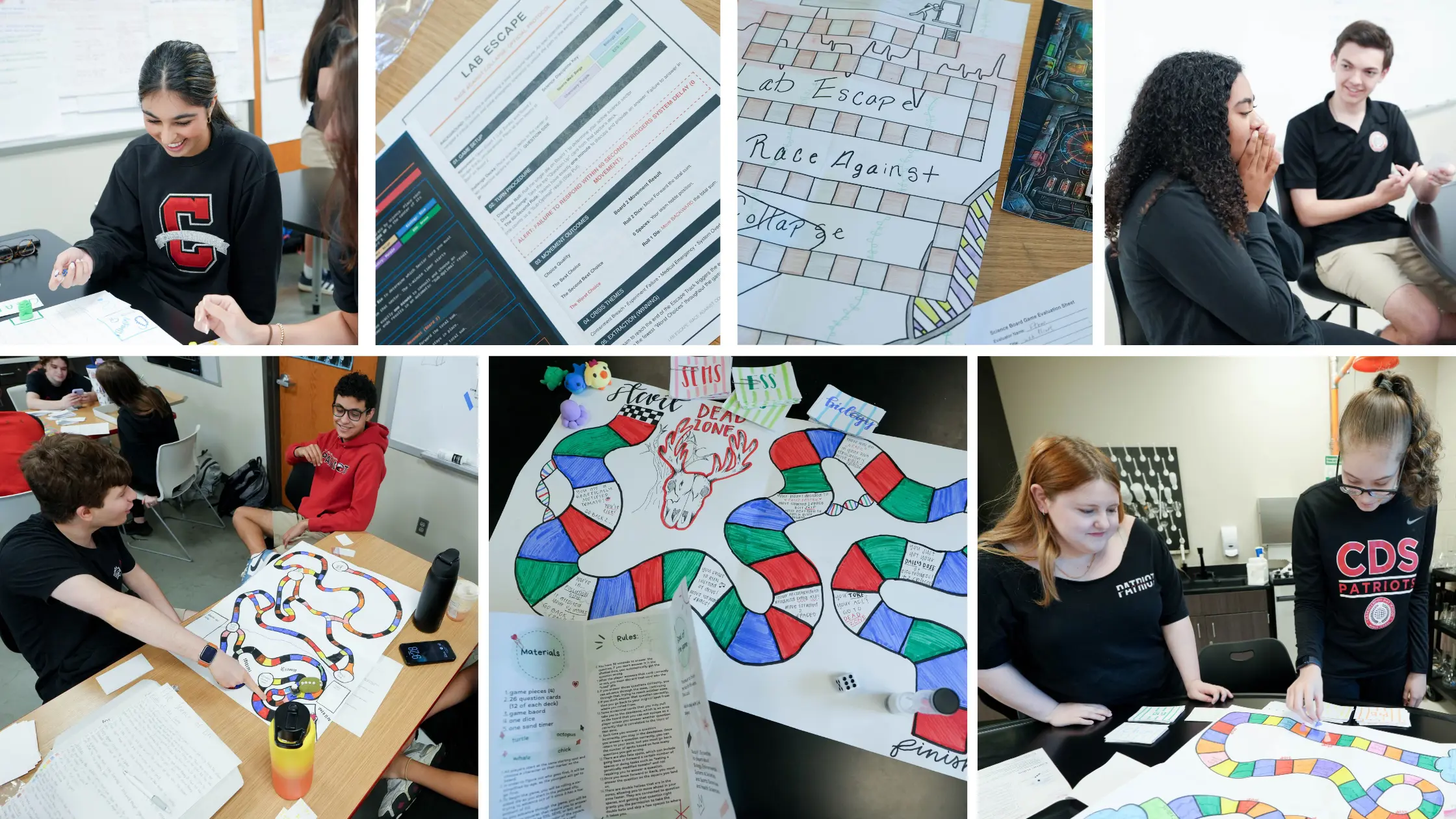
In classrooms filled with poster boards, dice, and hand-drawn designs, IB Diploma Programme students began turning complex scientific concepts into interactive experiences. What followed was not just a project, but a shift in perspective, one where learning moved off the page and into the hands of the students themselves.
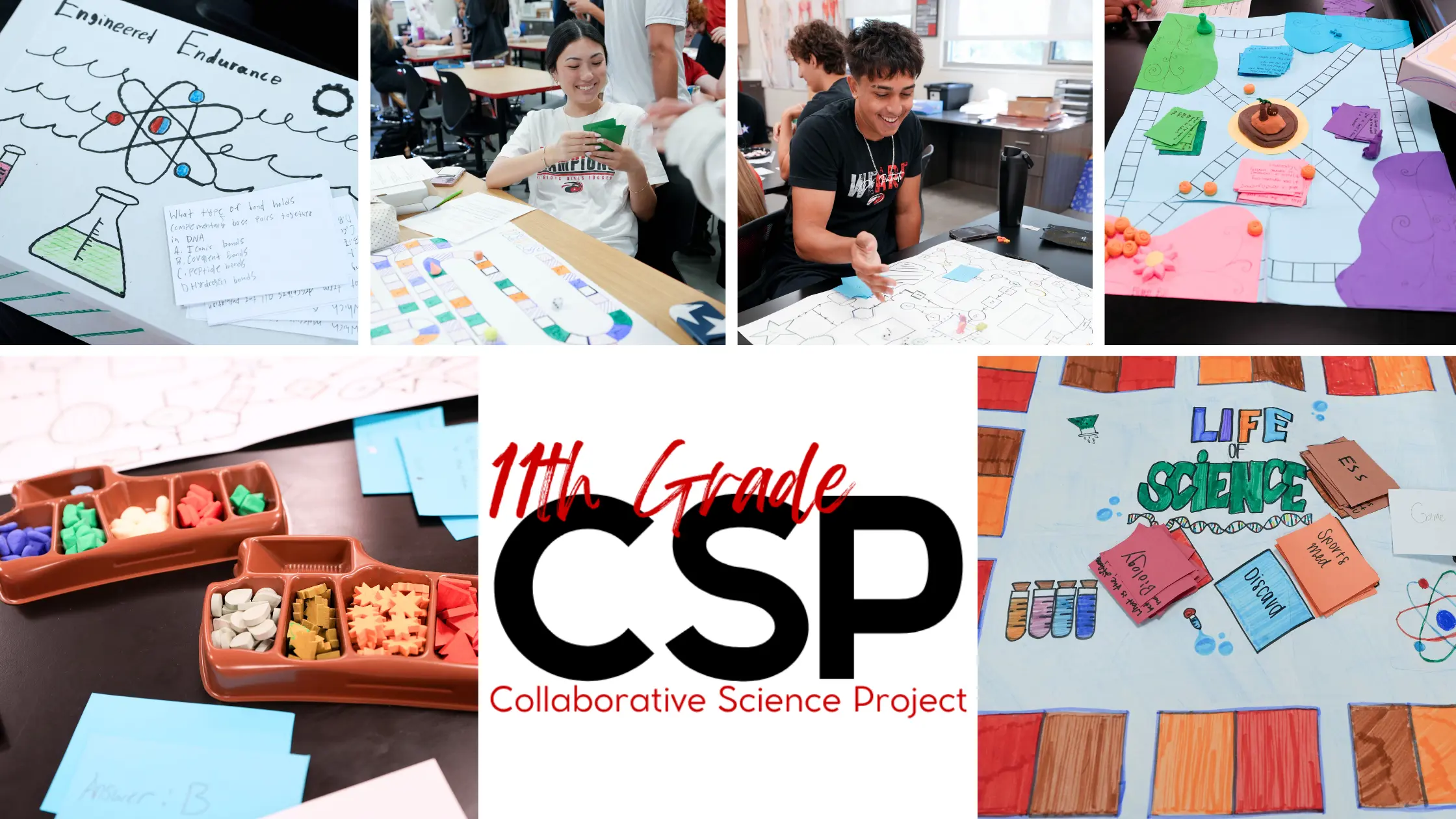
The 11th Grade Collaborative Science Project is a cornerstone of the IB experience, bringing together students across disciplines such as Biology, Chemistry, Physics, Environmental Systems, Computer Science, Design Technology, and Physiology and Biomechanics. The goal is not simply to produce a final product, but to engage in the process of scientific thinking. It is about asking questions, testing ideas, navigating challenges, and learning how to think together.
This year’s challenge, “Game-ify Science,” invited students to do something deceptively complex. They were not just learning scientific concepts. They were reimagining how those concepts could be experienced, tested, and understood through play.
Junior-year IB Diploma Programme students stepped into the role of designers, collaborators, and problem solvers, transforming classrooms into spaces of creativity and innovation.
Working in teams, students were tasked with designing fully playable board games rooted in real scientific understanding. The expectation was clear. Science could not sit on the sidelines. It had to be embedded into the mechanics of the game itself. Progress could not rely on chance alone. Players needed to think critically, apply knowledge, and make decisions grounded in scientific reasoning.
Ideas began to take shape as teams debated objectives, mapped out rules, and sketched their designs. Questions guided every step. What does it mean to win? How does a player move forward? How can concepts from multiple scientific disciplines come together in a way that feels both engaging and authentic? The complexity of those questions was exactly what made the process meaningful.
Once the games were developed, collaboration extended beyond individual groups. Students rotated through one another’s creations, engaging as both players and reviewers, offering thoughtful feedback and reflecting on the depth of critical thinking and the integration of scientific concepts. The process began to mirror the way science unfolds in the real world, shaped by shared ideas, sharpened through constructive critique, and strengthened through continuous refinement.
- In The Science of Life, players journeyed through themed regions such as Computer Science Land, Physics Land, Sports Medicine Land, and Biology Land. Progress depended on correctly answering questions and applying knowledge across disciplines, turning each move into an opportunity to deepen understanding of how different fields connect.
- In Lab Escape, urgency drove the experience. Players navigated a failing laboratory, racing against time to escape structural collapse. Each turn introduced new emergency scenarios and containment breaches, requiring quick thinking and an understanding of scientific processes to survive.
- Mysteries in the Lab took a different approach, blending science with storytelling. Players worked to solve a series of suspicious deaths, piecing together clues to determine whether the scientists themselves were responsible. With suspects like Ms. Cell-cilia and Chloe A. Phly, the game challenged players to think critically while engaging with scientific themes in a creative way.
- In Metabo-Lopoly: The Science of Athletic Performance, players managed training, competition, and recovery in pursuit of peak performance. Moving around the board, they accumulated performance points while balancing fatigue, hydration, and injury risk. Strategic decisions determined success, as overtraining could force rest while smart choices led to competitive advantage.
Each game offered a unique lens into scientific understanding. Some required players to think in systems, others emphasized strategy and decision making, and many blended disciplines in ways that mirrored real-world complexity. What united them all was a shared purpose. Learning was not separate from the experience. It was the experience.
The 11th Grade Collaborative Science Project is a reminder of what education can look like at its best. It is immersive, collaborative, and rooted in meaningful application. Somewhere between strategy and storytelling, between competition and collaboration, science became something students could hold in their hands, share with others, and experience in an entirely new way.
Click HERE to view the gallery of images from the 11th Grade Collaborative Science Project.